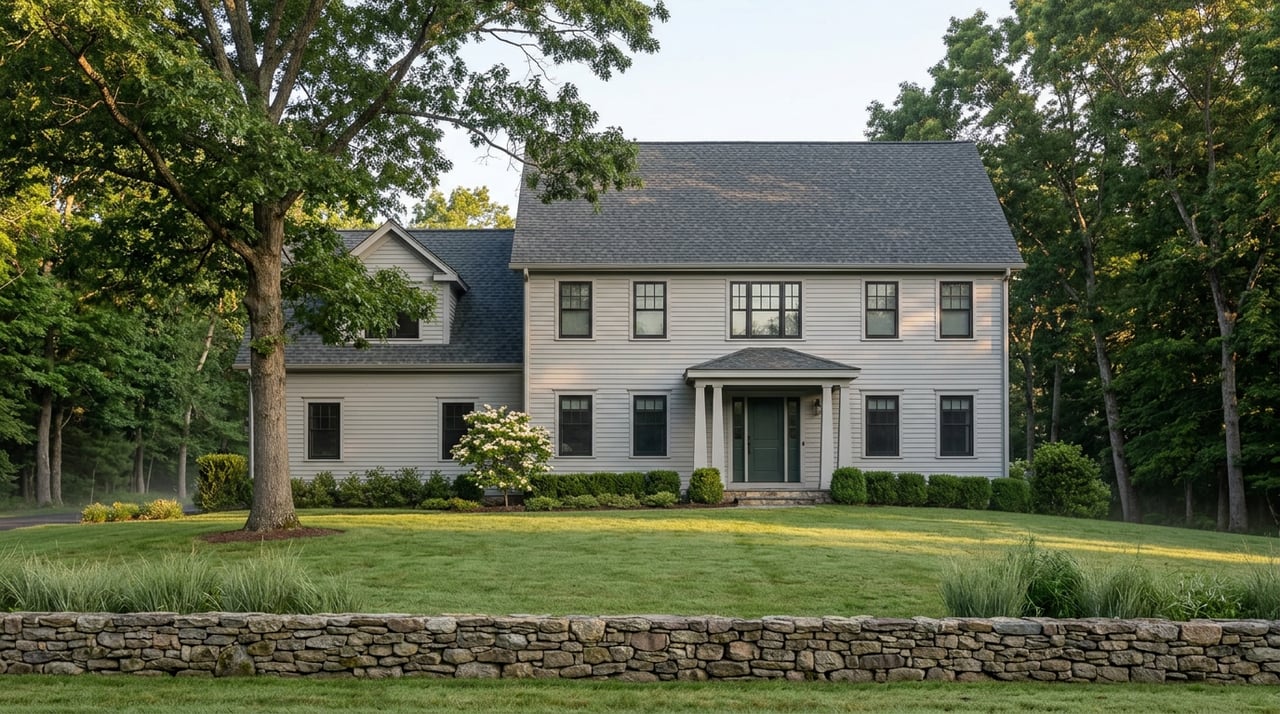
Why Your Bath Township Closing Can't Happen Without This Inspection First
September 3, 2026
September 3, 2026
Most sellers treat the septic and well check like every other item in a home inspection report: something to schedule once you're under contract, alongside radon and termites, inside a ten-day window a buyer's agent sets up. In Bath Township, that assumption is the thing that causes closing delays. Summit County Public Health requires that any home served by a private water system or a sewage treatment system be inspected and evaluated before the deed can transfer, not after. The rule sits in the county's own Environmental Health Code, and it applies to nearly every property in the township, since almost none of Bath sits on municipal water and sewer.
The twist most sellers don't expect is what the rule actually demands. It is not a pass or fail gate. It is a paperwork gate. Your system does not have to pass for the sale to close. It has to be looked at, and that report has to be filed with the county, before ownership changes hands. Get that sequence backward and you are the one holding up your own closing.
Summit County Public Health's Point of Sale program covers any one, two, or three family dwelling served by a sewage treatment system or private water system. A registered contractor evaluates each system, and the report goes to SCPH for review before the transfer can proceed. That timing sets Summit apart from several nearby counties, where the same evaluation can happen on a longer runway around the closing date rather than strictly ahead of it.
| County | When the inspection happens | What it costs |
|---|---|---|
| Summit | Evaluated and filed before the property transfers | Standard point of sale septic inspection runs $300 to $600 statewide |
| Cuyahoga | Up to 60 days after closing to complete inspection and any repairs | Varies by provider |
| Hamilton | Within 12 months of the sale | $200 to $400 |
If you or your buyer are used to how Cuyahoga or Hamilton County handle this, the Summit County timeline will feel compressed. It isn't unreasonable. It's just earlier than people expect, and the earlier a seller finds out, the more control they keep over their own schedule.
The evaluation itself is straightforward once it's scheduled. An inspector needs access inside the home and will run water to test the flow rate of the private water system and confirm the sewage treatment system is functioning. The whole visit takes one to two hours. If your septic lids are buried, they need to be uncovered before the inspector arrives, and the county is explicit on one point: do not pump the tank before the inspection happens, since that can mask exactly the condition the inspector is there to document.
A few practical items make the difference between a smooth visit and a delayed one:
None of this is complicated. It just needs to happen on a calendar that starts at listing, not at acceptance of an offer.
Here's where the township's own housing stock changes the math. According to the Bath Homeowners Association's septic guidance, the majority of homes in Bath Township run older filter bed or ET, evaporating, systems. Under state and county rules, that type of system does not require an annual maintenance contract, unlike spray irrigation, drip systems, aerobic three tank NPDES setups, or PEAT systems, which do.
That distinction sounds like a break for owners of older systems, and in terms of ongoing cost, it is. But it also means those systems generate less of a paper trail. A homeowner with a newer aerobic system has a service provider checking in on a schedule and building a documented history. A homeowner with the kind of filter bed system common across the township may not have touched their system's paperwork in years, simply because nothing in the rules required them to.
This isn't unique to modest older homes, either. The Estates of Bath, a subdivision of roughly 33 custom built estates in northwestern Bath Township built starting in 2007 on homesites running from 2.4 to nearly 11.5 acres, still relies on private well water and septic systems throughout, with no HOA fees to offset the cost of maintaining them. Newer construction in the township doesn't escape this rule. It just means a wider range of sellers, from long-owned family homes to seven figure estate lots, are walking into the same point of sale requirement without necessarily having current documentation in hand.
There is a way around a fresh inspection, but it's easy to misunderstand who controls it. If a system had a point of sale evaluation completed within the last two years, or was newly installed or replaced within the last 24 months, the transaction may qualify for an exemption. Summit County requires separate applications for the sewage system and the water system, and both must be signed by the buyer and submitted to the health department before closing.
That last detail catches sellers off guard more than any other part of this process. A seller cannot request the exemption on their own behalf, even with a recent inspection report in hand. The form has to come from the buyer. If your buyer isn't aware this step exists, or waits until the final week before closing to deal with it, a perfectly good two-year-old inspection report can end up sitting unused while the closing date slips.
The inspection fee itself is modest, typically $300 to $600 for a standard point of sale evaluation. The number that makes the fee worth paying early is what sits on the other side of a real failure. Replacing a failed septic system commonly runs $10,000 to $30,000 or more, depending on the type of system and the site conditions. A seller who orders the inspection at listing, rather than after an offer is signed, has time to price a known issue into the negotiation or fix it before a buyer's financing timeline is already running. A seller who waits is negotiating from behind, often with a closing date that's no longer flexible.
There's a buyer side worth understanding too. Since the inspection result itself doesn't legally block a transfer, a system with documented issues can still change hands. If the county follows up later on a nuisance concern, that follow-up lands on whoever owns the property at that point, which after closing is the buyer. Knowing what's in that report before you sign matters just as much on the buying side of a Bath Township contract as it does on the selling side.
The sellers who move through this cleanly are the ones who treat the point of sale inspection as the first call they make, not a task that surfaces once an offer is in hand. If you're weighing a sale in Bath Township, or comparing it against nearby communities, our Bath Township neighborhood page has more on what buyers are looking for in this market right now. And if you want a clear read on what your home could bring before you start any part of this process, our team can walk through it with you directly.
Does a failed inspection stop my closing? Not automatically. The requirement is that the system gets evaluated and the report gets filed with Summit County Public Health before transfer. A poor result doesn't legally halt the sale, though it can affect negotiations and disclosure, and the county may follow up with whoever owns the property afterward if a real nuisance concern is documented.
Can I get the inspection done before I list? Yes, and it's the approach that gives sellers the most control. Ordering it early means any findings show up while you still have room to price them into your listing strategy instead of discovering them mid-contract.
My septic was replaced two years ago. Do I still need a new inspection? You may qualify for an exemption, but the request has to come from your buyer, not from you. Make sure whoever is buying your home understands the form needs their signature and has to reach Summit County Public Health before closing.
Ready to talk through what a Bath Township sale looks like from the first phone call to the closing table? Amanda Carter Homes is local, responsive, and built for exactly this kind of detail.
Stay up to date on the latest real estate trends.

We believe success happens together. Our team combines collaboration, leadership, and local expertise to create an environment where agents can thrive personally and professionally.

AMANDA CARTER HOMES TEAM
THE AGENCY CLEVELAND
[email protected]
(330) 990-8405
138 North Main St Hudson, OH 44236